
Tick Information
Below is a graphic to identify and compare the sizes of these ticks.
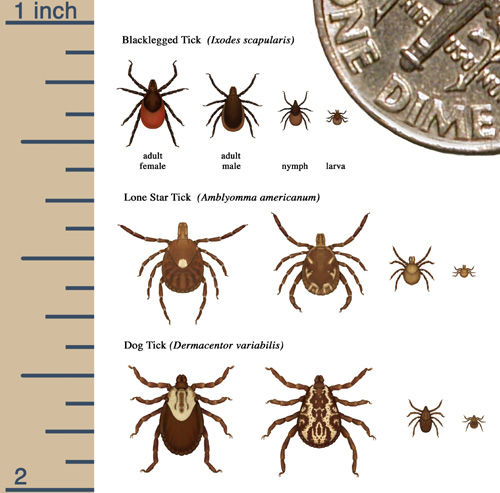
Black Legged or Deer Ticks are generally encountered in shady, wooded areas in leaf litter and low growing plants, such as along the forest preserve walking trails. These will be found April through June and late September through October. They are small and dark with no notable patterns. Deer Ticks the primary vectors for Lyme Disease. These ticks can go after humans when they are a very small size (think a poppy seed), and may go unnoticed while spreading pathogens.
The American Dog Tick is the most frequently encountered tick and found in fairly large numbers from April through June. They climb and hang off of uncut grasses and plants, readily attaching with a strong grip to anything that brushes by. They are larger, reddish, and have white patterns along the back. They are known to spread Rocky Mountain Spotted Fever and Tularemia, among other things, to humans and dogs.
The Lone Star Tick is usually only found in southern Illinois, though have been spreading further north, being found on occasion in Cook County. They can be encountered in wooded areas with brush or grasslands from April through July. The females can be easily identified by the singular white dot on their back (the "lone star"). While they may carry some of the other diseases often carried by ticks, bites from them may result in Alpha-gal Syndrome developing. Alpha-gal syndrome is a severe, potentially deadly, allergy to the sugar Alpha-gal. Alpha-gal is found in red meats, such as from cows and pigs. No more burgers. No more bacon.
PLEASE be sure to regularly check for ticks after outdoor activites in their habitats! Information on finding ticks on the body and safely removing them can be found here. The sooner ticks are found and removed, the less likely they are to spread any disease they carry. In respect to that, there are many other diseases ticks can carry. More information can be found at the IDPH's resource page here.